










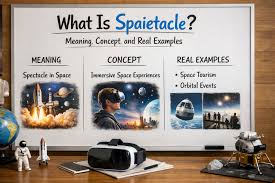
In a world saturated with digital products, platforms, and endless streams of content, standing out is no longer about being louder—it’s about being smarter. This is where spaietacle enters the conversation. While the term may sound unfamiliar at first, it represents a growing shift in how startups, entrepreneurs, and technology leaders approach digital experiences: blending spectacle with spatial intelligence, data-driven personalization, and meaningful engagement.
At its core, spaietacle is about designing digital environments that don’t just capture attention but sustain it through relevance, immersion, and adaptability. For founders navigating crowded markets and for tech professionals building the next wave of platforms, understanding this concept is no longer optional—it’s becoming essential.
Understanding Spaietacle in a Practical Context
Spaietacle isn’t a buzzword designed to impress investors or decorate pitch decks. It reflects a deeper transformation in how users interact with digital systems. Traditional digital experiences focused on functionality first, aesthetics second. Today, users expect something more fluid: an experience that feels intuitive, dynamic, and even emotionally resonant.
Think about how modern applications adapt to user behavior in real time. Streaming platforms suggest content before you even search. E-commerce stores reorganize themselves based on your preferences. Productivity tools anticipate your next move. These are early manifestations of spaietacle—where data, design, and user context converge to create something that feels almost alive.
For startups, this shift introduces both an opportunity and a challenge. The opportunity lies in differentiation. The challenge lies in execution, because creating a spaietacle-driven product requires more than good UI—it demands a deep understanding of human behavior, data systems, and scalable technology.
Why Spaietacle Matters for Startups
Startups often operate under constraints: limited resources, tight timelines, and high expectations. In such an environment, prioritizing user experience can feel secondary to building core functionality. However, ignoring spaietacle principles can result in products that technically work but fail to engage.
Users today are not just comparing your product to your competitors—they’re comparing it to the best digital experiences they’ve ever had. That means your SaaS dashboard is being judged against the seamlessness of a streaming app, and your onboarding flow is being measured against the simplicity of a top-tier mobile application.
Spaietacle helps bridge that gap. It encourages founders to think beyond features and focus on how those features are delivered. This mindset often leads to better retention, stronger brand perception, and ultimately, higher lifetime value per user.
The Core Elements of Spaietacle
To build a product that embodies spaietacle, several foundational elements must come together. These elements are not isolated—they work in synergy to create a cohesive experience.
1. Contextual Awareness
Modern systems must understand not just who the user is, but what they need at a specific moment. Contextual awareness involves leveraging data such as location, behavior patterns, and interaction history to deliver relevant experiences.
For example, a project management tool might highlight urgent tasks during working hours but shift to analytics and reporting views at the end of the week. This subtle adaptability creates a sense of intelligence that users quickly come to appreciate.
2. Dynamic Personalization
Personalization has evolved from simple name insertions in emails to complex, real-time content adaptation. Spaietacle thrives on this evolution by making personalization seamless and invisible.
The goal is not to overwhelm users with choices but to reduce friction by presenting what matters most. This requires robust data infrastructure and thoughtful design decisions that prioritize clarity over complexity.
3. Immersive Design
Visual appeal is no longer just about aesthetics—it’s about creating an environment that feels engaging and purposeful. Immersive design includes micro-interactions, motion design, and intuitive layouts that guide users naturally through a product.
However, immersion must be balanced with usability. Overly complex designs can hinder performance and frustrate users. The best spaietacle-driven designs are those that feel effortless, even when powered by sophisticated systems.
4. Continuous Learning Systems
A true spaietacle experience evolves over time. This is made possible through machine learning models and feedback loops that refine the product based on user interactions.
For startups, implementing continuous learning doesn’t require massive AI teams. Even simple analytics and iterative design improvements can create a sense of progression that users notice and value.
Comparing Traditional UX and Spaietacle-Driven UX
To better understand the shift, it’s helpful to look at how traditional user experience design compares to a spaietacle-driven approach.
| Aspect | Traditional UX Approach | Spaietacle-Driven Approach |
| Design Philosophy | Function-first | Experience-first with contextual intelligence |
| Personalization | Static or rule-based | Dynamic and data-driven |
| User Interaction | Linear and predictable | Adaptive and responsive |
| Data Utilization | Basic analytics | Real-time behavioral insights |
| Evolution Over Time | Periodic updates | Continuous learning and optimization |
This comparison highlights a fundamental shift. It’s not about replacing traditional UX principles but enhancing them with intelligence and adaptability.
Real-World Applications of Spaietacle
Spaietacle is already shaping multiple industries, often in ways that users may not explicitly recognize but deeply appreciate.
In fintech, apps are increasingly offering predictive insights—alerting users about unusual spending patterns or suggesting smarter financial decisions. In health tech, platforms are tailoring recommendations based on individual behavior and medical history, creating more personalized care journeys.
Even in enterprise software, where functionality traditionally dominated design, spaietacle is making an impact. Dashboards are becoming more intuitive, workflows more streamlined, and insights more actionable.
For entrepreneurs, these examples offer a clear message: the future belongs to products that don’t just serve users but understand them.
Implementing Spaietacle in Your Startup
Adopting a spaietacle approach doesn’t require a complete overhaul of your existing product. It starts with small, intentional steps that gradually transform the user experience.
First, focus on data. Without meaningful data, personalization and contextual awareness are impossible. Invest in analytics tools that provide actionable insights rather than just surface-level metrics.
Next, prioritize user journeys over individual features. Map out how users interact with your product from start to finish, identifying friction points and opportunities for enhancement.
Then, embrace iteration. Spaietacle is not a one-time achievement—it’s an ongoing process. Regular updates, A/B testing, and user feedback loops are essential to refining the experience.
Finally, align your team. Designers, developers, and product managers must share a common vision. Spaietacle thrives in environments where collaboration and experimentation are encouraged.
Challenges and Considerations
While the benefits of spaietacle are compelling, implementing it comes with challenges. Data privacy is a major concern, especially as personalization becomes more advanced. Users are increasingly aware of how their data is used, and transparency is critical.
Scalability is another issue. Building systems that adapt in real time requires robust infrastructure, which can be resource-intensive for early-stage startups.
There’s also the risk of overengineering. Not every product needs advanced personalization or complex design elements. The key is to align your approach with your users’ actual needs rather than chasing trends.
The Future of Spaietacle
As technology continues to evolve, spaietacle will likely become more sophisticated and more accessible. Advances in artificial intelligence, edge computing, and immersive technologies such as augmented reality will expand the possibilities even further.
Imagine digital workspaces that reorganize themselves based on your daily priorities, or educational platforms that adapt in real time to your learning style. These are not distant possibilities—they are the next logical step in the evolution of digital experiences.
For startups and entrepreneurs, staying ahead of this curve requires both curiosity and discipline. It’s about exploring new technologies while maintaining a clear focus on user value.
Conclusion
Spaietacle represents more than a trend—it signals a fundamental shift in how digital products are conceived, built, and experienced. In an era where attention is scarce and expectations are high, creating intelligent, adaptive, and engaging experiences is no longer a luxury—it’s a necessity.For founders and tech professionals, the takeaway is clear. Success will not be defined solely by what your product does, but by how it makes users feel and how effectively it adapts to their needs. By embracing the principles of spaietacle, you position your product not just to compete, but to lead in an increasingly experience-driven digital landscape.