









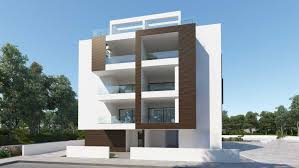
In a city skyline where glass towers compete for attention and ambition moves faster than traffic below, the idea of a penthouse hub is quietly reshaping how modern leaders think about space, work, and influence. What was once associated purely with luxury living has evolved into something far more strategic—a hybrid environment where business decisions, creative thinking, and high-level networking happen under one roof.
For startup founders, investors, and tech professionals, this shift is more than aesthetic. It reflects a deeper transformation in how value is created in the digital economy. The boundaries between office, home, and innovation space are dissolving. In their place, new ecosystems are emerging—spaces designed not just for comfort, but for performance, clarity, and control.
A penthouse hub sits at the intersection of this evolution. It is not simply an apartment at the top of a building. It is a curated environment where leadership, lifestyle, and technology converge into a single operational experience.
Understanding the Modern Penthouse Hub
At its foundation, a penthouse hub is a multifunctional executive environment that blends residential luxury with professional-grade infrastructure. Unlike traditional penthouses focused solely on lifestyle, this model is intentionally designed to support business activity at the highest level.
For modern entrepreneurs, this concept aligns with how work actually happens today. Decisions are no longer confined to boardrooms. Deals are not always closed in offices. Strategy is not developed in isolation. Instead, business unfolds continuously across digital platforms, private conversations, and real-time data systems.
A penthouse hub reflects this reality by removing friction between life and work. It becomes a centralized environment where meetings, analysis, relaxation, and planning can coexist without interruption. The result is not just convenience, but cognitive efficiency.
In global financial and tech cities like Dubai, New York, and Singapore, this model is increasingly seen as part of an elite operational strategy rather than a luxury trend.
Why the Penthouse Hub Concept Is Gaining Momentum
The rise of the penthouse hub is not accidental. It is directly linked to structural changes in how businesses operate in the digital age.
Remote work has already decentralized teams. Cloud computing has removed the need for physical infrastructure. Artificial intelligence is automating decision support systems. Together, these shifts have changed what executives need from their physical environments.
Instead of traditional office spaces, leaders now prioritize environments that offer control, privacy, and integration. Time has become the most valuable asset, and commuting between fragmented spaces is increasingly seen as inefficiency rather than routine.
A penthouse hub solves this by consolidating key functions into a single high-performance environment. Work, strategy, communication, and recovery all happen within one controlled ecosystem.
To understand this shift more clearly, consider the structural differences:
| Aspect | Traditional Executive Space | Penthouse Hub Environment |
| Purpose | Work-focused office | Integrated living and strategy hub |
| Mobility | Requires commuting | Fully centralized environment |
| Decision Flow | Scheduled and delayed | Real-time and continuous |
| Privacy | Moderate corporate privacy | High-level controlled privacy |
| Technology | Standard office tools | Advanced smart ecosystem |
| Networking | Formal meetings | Lifestyle-integrated engagement |
This evolution reflects a deeper truth: modern leadership is no longer about location—it is about environment design.
The Architecture of a Penthouse Hub Experience
A well-developed penthouse hub is not defined by square footage alone. Its value lies in how space is structured to support different modes of thinking and operating.
Typically, these environments are divided into interconnected zones that serve distinct functions while remaining seamlessly integrated.
The living area provides mental recovery and emotional balance. The workspace supports focused execution and strategic thinking. A digital command zone enables real-time monitoring of business performance. Social and networking areas allow for high-value relationship building in a controlled setting.
What makes this structure powerful is not separation, but fluidity. A conversation can shift from casual discussion to strategic negotiation without changing physical environment. A data review can transition into decision-making without interruption.
This fluid design mirrors how modern businesses actually operate—nonlinear, fast-moving, and interconnected.
Technology as the Backbone of the Penthouse Hub
No modern penthouse hub exists without advanced technological integration. In fact, technology is what transforms it from a luxury residence into a functional executive ecosystem.
Smart systems manage lighting, climate, security, and energy consumption. AI-driven assistants support scheduling, communication, and data interpretation. High-speed connectivity ensures uninterrupted global communication.
Many hubs also include real-time business dashboards that display financial metrics, market trends, and operational performance indicators. For founders managing multiple ventures or investment portfolios, this creates a centralized decision-making environment.
The integration of IoT (Internet of Things) devices further enhances control. Everything from room settings to security access can be managed digitally, often through a single interface.
In advanced setups, predictive analytics even anticipate user behavior, adjusting environments automatically based on usage patterns and preferences.
This level of integration transforms space into intelligence.
Penthouse Hub as a Strategic Business Advantage
Beyond comfort and design, the penthouse hub represents a strategic advantage for high-level entrepreneurs and executives.
Time compression is one of its most significant benefits. By eliminating travel between office, home, and meeting spaces, leaders regain hours each day. Over time, this translates into improved productivity and sharper decision-making.
Another advantage is cognitive continuity. Traditional work environments often require mental context switching. A penthouse hub reduces this disruption by keeping strategic thinking within a consistent environment.
It also enhances negotiation dynamics. Hosting investors or partners in a private, well-designed environment often leads to more open discussions and stronger relationship building compared to formal corporate settings.
For industries like venture capital, fintech, luxury real estate, and digital innovation, these advantages directly influence outcomes.
The Psychological Dimension of Elevated Workspaces
Environment shapes thinking more than most people realize. Research in behavioral science consistently shows that spatial design influences creativity, stress levels, and decision quality.
A penthouse hub leverages this principle intentionally. Elevated views create psychological distance from operational pressure, allowing for clearer strategic thinking. Natural light and open layouts improve cognitive performance. Controlled privacy reduces external distractions.
There is also a symbolic effect. Operating from an elevated space often reinforces a mindset of perspective and long-term thinking. Instead of reacting to short-term pressures, leaders are encouraged to think in broader strategic cycles.
This psychological shift can have a measurable impact on leadership behavior and decision-making quality.
Comparing Business Models: Traditional Office vs Penthouse Hub
To fully understand the transformation, it helps to compare how each model influences daily operations and long-term strategy.
| Factor | Traditional Office Model | Penthouse Hub Model |
| Work Rhythm | Structured hours | Fluid and continuous |
| Collaboration | Scheduled interactions | Organic and integrated |
| Innovation Cycle | Slower iteration | Rapid experimentation |
| Leadership Focus | Operational oversight | Strategic thinking |
| Environment Control | Limited | Fully customizable |
| Brand Perception | Corporate identity | Lifestyle-integrated prestige |
The shift here is not just operational—it is philosophical. One model separates life and work. The other integrates them into a unified system.
Challenges and Practical Limitations
Despite its advantages, the penthouse hub model is not universally applicable.
Cost remains a significant barrier. These spaces require substantial investment in both real estate and technological infrastructure. For early-stage startups, this model is often unrealistic.
Another challenge is scalability. While effective for individual founders or small leadership teams, it does not replace broader organizational infrastructure.
There is also the risk of isolation. Over-centralization can reduce exposure to diverse environments and external perspectives, which are often critical for innovation.
Finally, maintaining balance is essential. When work and living spaces merge completely, boundaries can blur, potentially leading to overwork if discipline is not maintained.
The Future of Penthouse Hub Ecosystems
As cities become more vertically integrated and technology continues to evolve, the penthouse hub concept is likely to expand rather than disappear.
Future versions may include AI-managed environments capable of fully autonomous optimization. Biometric systems could adjust lighting, temperature, and workflow settings based on real-time emotional and cognitive states.
We may also see hybrid physical-digital environments where executives can extend their penthouse hub into virtual reality spaces for global collaboration.
Urban developers are already exploring mixed-use luxury towers that integrate residential, business, and innovation functions into single vertical ecosystems.
In this context, the penthouse hub is not just a trend—it is a preview of how elite urban infrastructure will evolve.
Conclusion
The penthouse hub represents a significant shift in how modern leadership environments are defined. It moves beyond traditional boundaries between home and office, replacing them with integrated ecosystems designed for performance, clarity, and strategic control.
For entrepreneurs, investors, and tech professionals, it offers a new way to think about productivity—not as something tied to location, but as something shaped by environment.
While not accessible or necessary for every stage of business, its influence on modern executive culture is undeniable. It reflects a broader transformation where space, technology, and leadership are becoming increasingly interconnected.As the future of work continues to evolve, the penthouse hub stands as a symbol of how far that integration can go when design, ambition, and innovation converge at the top of the skyline.