










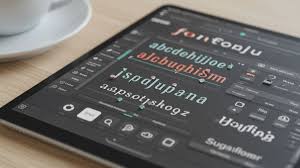
Most people think design decisions are about aesthetics—what looks good, what feels modern, what matches a brand. But in today’s digital economy, those choices go far deeper. A single typographic decision can influence how long a user stays on a page, how much they trust a product, and even whether they convert. That’s where fontlu enters the conversation.
Fontlu is emerging as a way of thinking about typography not as decoration, but as infrastructure. For startup founders, entrepreneurs, and tech professionals, it reframes fonts from static visual choices into dynamic systems that shape user experience, product perception, and brand consistency at scale.
Understanding Fontlu in a Practical Digital Context
At its simplest, fontlu represents a structured approach to typography in digital environments. Instead of treating fonts as isolated design elements, it treats them as part of a broader system—one that interacts with layout, usability, performance, and brand identity.
In early-stage startups, typography decisions are often quick and informal. A designer picks a font that “feels right,” and the product moves forward. But as the product scales, inconsistencies begin to appear. Marketing uses one style, the product interface uses another, and documentation follows its own rules. Over time, this fragmentation weakens brand coherence.
Fontlu addresses this by introducing consistency, scalability, and intentionality into typographic systems.
Why Fontlu Matters More Than Ever
The importance of fontlu has grown alongside the complexity of digital products. Today’s users interact with brands across multiple touchpoints—web apps, mobile apps, dashboards, emails, and marketing pages. Each of these environments places different demands on typography.
At the same time, user expectations have changed. People now associate typography quality with product quality. A poorly structured interface with inconsistent fonts can feel untrustworthy, even if the underlying product is powerful.
Fontlu helps solve this problem by ensuring typography behaves as a unified system rather than a collection of disconnected choices.
There’s also a performance angle. Modern design systems rely on scalability. Without a structured typographic approach, teams waste time making repetitive decisions, leading to inefficiencies across design and development workflows.
The Business Impact of Fontlu
Typography might seem like a design detail, but its impact on business outcomes is measurable.
When typography is consistent and well-structured, users process information more easily. This leads to better engagement, lower cognitive load, and improved conversion rates. On the other hand, inconsistent typography can create friction, causing users to disengage faster.
Brand perception is another critical factor. Fonts communicate tone instantly. A clean, modern typeface can signal innovation, while a more traditional serif font can communicate authority and stability. Fontlu ensures these signals remain consistent across all user touchpoints.
Operationally, fontlu also reduces friction between teams. Designers and developers no longer need to make repetitive typographic decisions. Instead, they work within a defined system that speeds up production and reduces inconsistency.
How Fontlu Shapes User Experience
Typography is one of the most overlooked drivers of user experience. It determines how quickly users can scan content, how easily they can understand information, and how comfortable they feel interacting with a product.
Fontlu improves user experience by introducing hierarchy and predictability. When users encounter consistent typographic patterns, they learn how to navigate content intuitively. Headings, body text, and interactive elements become easier to distinguish.
This reduces cognitive load, allowing users to focus on the content itself rather than deciphering its structure.
In fast-paced digital environments, this clarity becomes a competitive advantage.
The Structural Problem Fontlu Solves
Many organizations struggle with what might be called typographic fragmentation. As products evolve, different teams introduce their own styling decisions. Over time, this leads to inconsistency.
Marketing pages may use different fonts than the product interface. Documentation may follow outdated styles. Even within the product itself, spacing and hierarchy may vary between features.
Fontlu solves this by introducing a centralized typographic system that governs all usage.
A Practical Breakdown of Fontlu Implementation
Implementing fontlu requires both design discipline and technical alignment. It’s not just about choosing fonts—it’s about defining how they behave across contexts.
Here’s a simplified view of how organizations typically structure a fontlu-based system:
| Layer | Purpose | Example Application | Outcome |
| Base Typography | Core font selection | Primary & secondary fonts | Brand consistency |
| Hierarchy Rules | Define text relationships | H1, H2, body, captions | Clear content structure |
| Responsive Scaling | Adapt across devices | Mobile vs desktop sizing | Improved readability |
| UI Integration | Apply in product interfaces | Buttons, forms, dashboards | Seamless UX |
| Governance System | Maintain consistency over time | Design system rules | Long-term scalability |
This structure ensures typography is not reinvented with every new feature or campaign.
The Role of Design Systems in Fontlu
Fontlu is closely tied to the rise of design systems. Modern digital products rely on reusable components to maintain consistency and efficiency. Typography is one of the foundational layers of these systems.
By embedding font rules into a design system, organizations ensure that every new feature automatically aligns with brand standards. This reduces design debt and accelerates development cycles.
It also improves collaboration between teams. Designers, developers, and product managers all work from the same typographic language, reducing miscommunication and rework.
Why Startups Benefit Most from Fontlu
For startups, speed is everything—but so is clarity. In the rush to build and ship products, typography often becomes inconsistent. This may not seem urgent at first, but it creates long-term friction.
Fontlu helps startups scale without losing design coherence. It ensures that as the product grows, the visual identity remains stable.
It also reduces dependency on individual design decisions. Instead of relying on subjective choices, teams operate within a structured system that guides consistency.
In early-stage environments, this can significantly reduce design bottlenecks.
Common Mistakes Without Fontlu
Organizations that lack a structured typographic approach often encounter predictable issues.
One common problem is over-customization. Different teams modify fonts for specific needs without considering the broader system. This leads to inconsistency and confusion.
Another issue is lack of hierarchy. Without clear typographic rules, content becomes harder to scan and understand. Users struggle to differentiate between primary and secondary information.
A third challenge is scalability. As products expand, maintaining consistency manually becomes nearly impossible without a system like fontlu.
Fontlu and the Future of Digital Branding
As digital experiences become more immersive and multi-platform, typography will play an even greater role in shaping brand identity.
Fontlu positions typography as a dynamic brand asset rather than a static design choice. This means fonts can adapt to different contexts while maintaining consistency.
With advances in variable fonts and responsive design technologies, typography is becoming more flexible than ever. Fontlu provides the structure needed to manage this flexibility effectively.
In the future, brands that master typography systems will have a significant advantage in maintaining cohesive digital identities across platforms.
The Psychological Side of Fontlu
Typography influences perception more than most people realize. Studies in cognitive psychology show that font choice affects readability, trust, and emotional response.
Fontlu leverages this by creating predictable typographic patterns that reduce cognitive friction. When users recognize structure, they feel more comfortable navigating content.
This subtle psychological effect contributes to better engagement and stronger brand trust.
From Design Choice to Strategic Asset
One of the most important shifts fontlu introduces is treating typography as a strategic asset rather than a visual decision.
In traditional workflows, typography is often finalized late in the design process. With fontlu, it becomes foundational. It influences layout, interaction design, and even content strategy.
This shift elevates typography from an aesthetic concern to a core component of product architecture.
Conclusion: Why Fontlu Matters for Modern Digital Teams
Fontlu represents a more mature way of thinking about typography in digital products. It acknowledges that fonts are not just visual elements—they are systems that shape user experience, brand identity, and operational efficiency.
For founders, entrepreneurs, and tech professionals, adopting a fontlu mindset means building products that are not only visually consistent but also structurally scalable.
In a world where users judge products in seconds, typography can either create clarity or confusion. Fontlu ensures it creates clarity.
Ultimately, the organizations that succeed will be those that treat typography with the same strategic importance as code, architecture, and product design. Fontlu is not just a design concept—it’s a competitive advantage.