








In today’s digital-first world, information has never been more abundant—or more fragmented. The phrase “libgen anna essential elements” has quietly emerged in online discussions around unrestricted access to knowledge, especially among students, researchers, and tech-savvy professionals who are navigating the rising cost of digital content. At its core, this topic sits at the intersection of open knowledge, digital inequality, and the evolving structure of information distribution.
While platforms like Library Genesis (commonly known as LibGen) and Anna’s Archive are often discussed in niche online communities, the broader conversation is not really about websites. It is about a deeper shift: how people access books, research papers, and educational material in a world where paywalls increasingly define what is “accessible” and what is not.
For startup founders, entrepreneurs, and digital professionals, understanding this ecosystem is less about curiosity and more about context. It reflects how digital demand, copyright enforcement, and global knowledge gaps are reshaping the information economy.
LibGen Anna Essential Elements and the Digital Knowledge Ecosystem
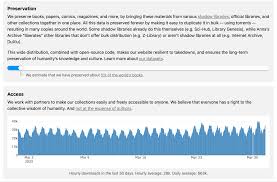
To understand libgen anna essential elements, it is important to first understand what these platforms represent in the broader digital ecosystem. Library Genesis and Anna’s Archive are often categorized as “shadow libraries”—large-scale, user-aggregated repositories that index and distribute academic books, research papers, and publications.
However, reducing them to simple file-sharing sites misses the bigger picture. These platforms emerged as a response to structural problems in academic publishing: high textbook costs, restricted journal access, and fragmented digital licensing models. Over time, they evolved into massive decentralized databases that attempt to mirror global academic knowledge.
From a systems perspective, their structure typically revolves around three key components: indexing, redundancy, and accessibility. Indexing allows users to search vast libraries of content. Redundancy ensures multiple copies exist across distributed networks. Accessibility, though controversial, is the driving force behind their popularity.
The phrase libgen anna essential elements often refers informally to the core building blocks that make these systems functional in the first place: metadata organization, mirror networks, community-driven uploads, and search-based retrieval systems.
The Essential Elements Behind LibGen Anna Systems
When professionals analyze libgen anna essential elements, they are often trying to break down what makes these platforms operationally scalable despite legal and technical pressure. Several foundational components stand out.
First is metadata structuring. Without properly categorized metadata—titles, authors, editions, and formats—large-scale digital libraries would collapse under their own weight. These systems rely heavily on user-generated tagging and automated scraping to maintain structure.
Second is distributed storage. Instead of relying on centralized servers, content is often mirrored across multiple nodes. This reduces downtime and makes takedown efforts less effective.
Third is search optimization. Unlike traditional libraries, these platforms behave more like search engines than catalogs. The ability to quickly locate a specific edition of a textbook or research paper is what drives usability.
Fourth is community contribution. A significant portion of content is uploaded, verified, or corrected by global users. This decentralized contribution model allows continuous expansion without traditional institutional oversight.
Finally, resilience engineering plays a role. These ecosystems are designed to persist even under legal or infrastructural disruption, often reappearing under new domains or mirror structures.
Why LibGen Anna Essential Elements Matter in the Real World
The reason libgen anna essential elements attracts attention beyond niche online forums is because it highlights a real and growing tension in the knowledge economy.
For students in developing regions, access to expensive textbooks or subscription-based journals can be a major barrier. For independent researchers, paywalled content can slow innovation. Even in startups, where speed of learning is critical, access to technical documentation or research papers can directly influence product development timelines.
This is where the conversation becomes more nuanced. The existence of shadow libraries signals a gap in the formal publishing ecosystem. It reflects demand that is not fully satisfied by existing legal distribution models.
At the same time, it raises questions about sustainability. Academic publishers argue that peer review, editing, and hosting infrastructure require funding. Critics argue that knowledge, especially publicly funded research, should not be locked behind paywalls.
For entrepreneurs and tech professionals, this tension is especially relevant. It mirrors broader digital economy patterns: centralized control versus decentralized access, subscription fatigue versus open ecosystems, and platform monopolies versus distributed alternatives.
Comparative View of Digital Knowledge Platforms
To better understand where libgen anna essential elements fit in the wider landscape, it helps to compare shadow libraries with legitimate open-access platforms and traditional digital libraries.
| Platform Type | Examples | Core Purpose | Accessibility Model | Key Strength | Key Limitation |
| Shadow Libraries | LibGen, Anna’s Archive | Broad access to academic content | Free, decentralized | Massive content availability | Legal and ethical concerns |
| Open Access Libraries | Internet Archive, PubMed Central | Legal free knowledge distribution | Free with licensing | Legally safe access | Limited coverage of latest textbooks |
| Commercial Publishers | Elsevier, Springer, Wiley | Academic publishing and journals | Subscription-based | High-quality peer review | Expensive paywalls |
| Educational Repositories | Project Gutenberg | Public domain literature | Free | Legal classic texts | Limited modern content |
This comparison highlights an important insight: no single system currently satisfies global demand for accessible, up-to-date, and legally unrestricted knowledge. The ecosystem is fragmented, and each model addresses only part of the problem.
Legal, Ethical, and Cybersecurity Dimensions
Any discussion around libgen anna essential elements must also consider the legal and ethical framework surrounding digital content distribution.
From a legal standpoint, most copyrighted academic and commercial publications are protected under intellectual property law. Unauthorized distribution typically violates these protections, regardless of intent or educational use.
Ethically, the debate is more complex. Many argue that knowledge should be treated as a global public good, especially when research is publicly funded. Others emphasize the importance of compensating authors, publishers, and institutions who maintain quality control.
Cybersecurity is another overlooked dimension. Unregulated platforms may expose users to risks such as malware-infected files, manipulated documents, or data tracking. Unlike verified academic databases, shadow ecosystems do not always guarantee content integrity.
For professionals, this introduces a risk-reward calculation. While access may seem beneficial in the short term, the long-term implications include legal exposure, data security concerns, and ethical considerations in professional environments.
The Future of Knowledge Access and Digital Libraries
Looking ahead, the conversation around libgen anna essential elements reflects a broader transformation in how knowledge systems are evolving.
We are already seeing movement toward hybrid models. Universities are increasingly adopting open-access mandates. Governments and funding agencies are requiring publicly funded research to be freely accessible. At the same time, new digital platforms are experimenting with tiered access, freemium academic models, and blockchain-based publishing verification.
Artificial intelligence is also reshaping this landscape. As AI systems increasingly rely on large datasets for training and summarization, the question of data sourcing becomes critical. Who owns knowledge, and who gets to access it, will continue to shape the next decade of digital infrastructure.
For startups and entrepreneurs, this is not just an academic issue. It directly influences innovation speed, competitive advantage, and access to learning resources. Companies that understand how to navigate open and closed knowledge systems effectively will have a strategic edge.
Conclusion
The discussion around libgen anna essential elements is ultimately not just about specific platforms or digital libraries. It is about a global system in transition. The tension between access and ownership, openness and control, continues to define how knowledge is distributed in the digital age.
For professionals in technology, business, and research, this topic offers an important lens into how information flows shape opportunity. While the current ecosystem remains fragmented, the direction is clear: greater pressure for openness, stronger debates around ethics, and continuous innovation in how knowledge is stored, shared, and accessed.
Understanding these dynamics is less about choosing sides and more about recognizing the structural forces shaping the future of learning and innovation.